
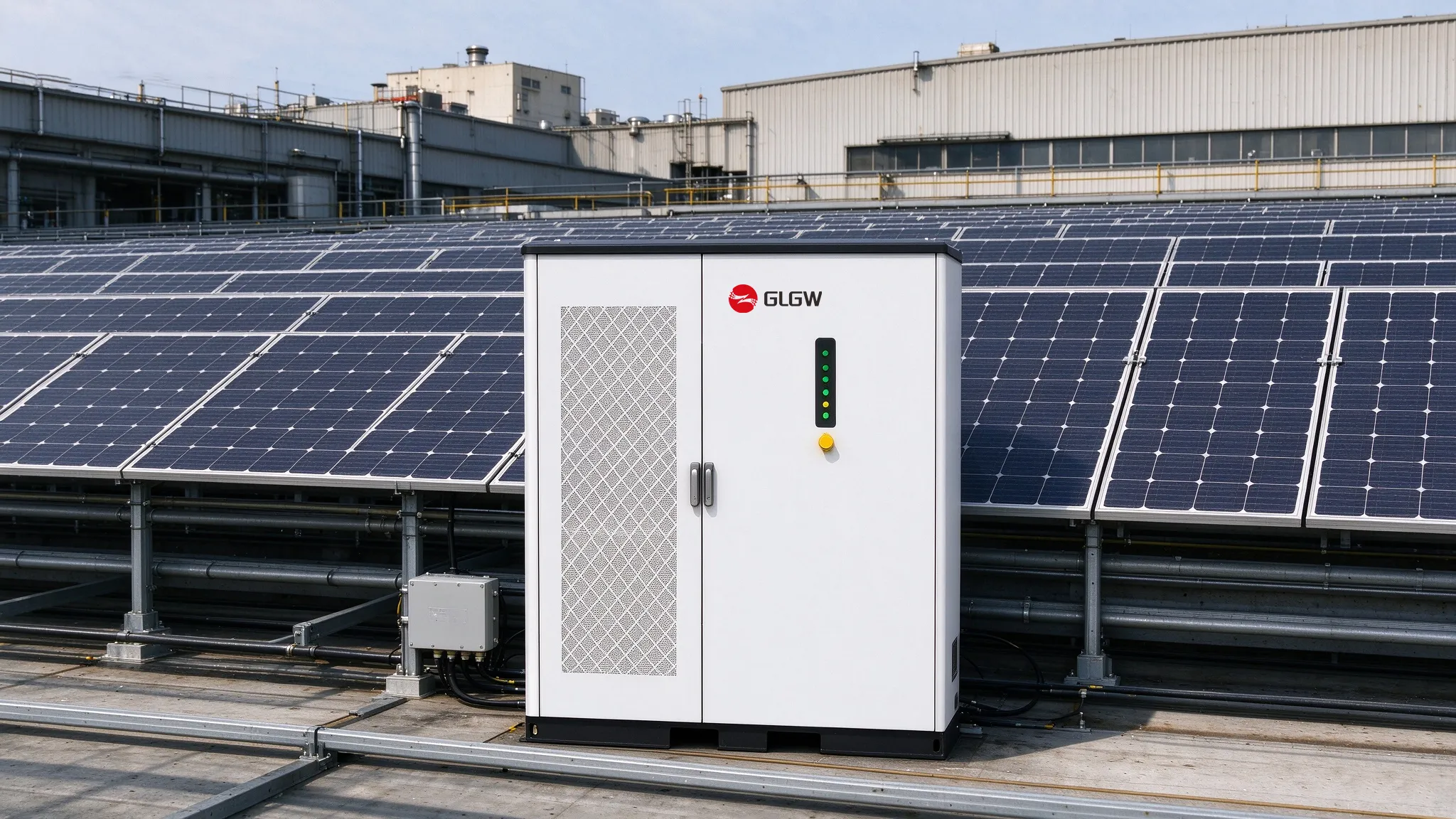
For decades, the photovoltaic (PV) module has dominated the visual and financial narrative of renewable energy. However, in the high-stakes realm of Commercial and Industrial (C&I) and utility-scale solar, the silicon panels are merely the raw engines of generation. The definitive brain of the modern energy asset—the component that dictates thermodynamic efficiency, grid compliance, and ultimate financial Return on Investment (ROI)—is the Solar Inverter.
Historically, the inverter was treated as a commoditized, passive bridge tasked solely with converting Direct Current (DC) into Alternating Current (AC). Today, driven by stringent utility grid codes and the rapid convergence of PV with Battery Energy Storage Systems (BESS), the Solar Inverter has evolved into a highly complex, bidirectional power electronics hub. For Engineering, Procurement, and Construction (EPC) firms, specifying the correct inverter architecture is no longer a simple calculation of wattage; it is a strategic decision regarding active grid stabilization, cybersecurity, and lifecycle operational expenditure (OPEX). This B2B technical guide chronicles the evolution of inverter topologies and their critical role in modern energy systems.
1. The Shift to High-Frequency Power Electronics
The foundational physics of DC-to-AC conversion rely on rapidly switching the unidirectional DC voltage into a stepped AC wave, which is then filtered into a pure sine wave. The earliest commercial inverters utilized massive, heavy copper-wound transformers to execute this process and provide galvanic isolation. While robust, these legacy central inverters were incredibly heavy, thermally inefficient, and occupied massive real estate footprints.
Silicon Carbide (SiC) and Solid-State Switching
The modern Solar Inverter has undergone a solid-state revolution. Tier-one manufacturers have largely abandoned bulky transformers in favor of Transformerless (TL) architectures powered by advanced semiconductors like Silicon Carbide (SiC) and Gallium Nitride (GaN). These wide-bandgap materials allow the inverter’s internal Insulated-Gate Bipolar Transistors (IGBTs) to switch at exponentially higher frequencies (tens of thousands of times per second) with near-zero thermal loss.
For EPCs and facility directors, this metallurgical leap translates directly to the bottom line. SiC-powered transformerless inverters achieve peak thermodynamic conversion efficiencies exceeding 99%. Furthermore, the elimination of the heavy copper transformer reduces the physical weight of a 100kW commercial inverter from hundreds of kilograms to a unit that two technicians can easily wall-mount, drastically slashing heavy machinery and rigging CAPEX during installation.
2. Smart Grid Integration: From Passive to Active Power Control
In the early days of grid-tied solar, utility companies viewed PV systems as unpredictable nuisances. Legacy inverters were programmed with a singular, blunt safety protocol: if the utility grid voltage or frequency fluctuated even slightly, the inverter immediately tripped offline (anti-islanding) and stopped producing power. As global solar penetration scaled into the gigawatts, this passive behavior became a massive liability. If thousands of commercial arrays tripped simultaneously during a minor grid anomaly, it could trigger a catastrophic, cascading regional blackout.
Low Voltage Ride Through (LVRT) and Frequency Regulation
To secure grid stability, international electrical codes (such as IEEE 1547 and UL 1741 SA) mandated the birth of the “Smart Inverter.” Today, a commercial Solar Inverter is required to actively defend the utility grid. Through Low Voltage Ride Through (LVRT) protocols, when the grid experiences a sudden voltage sag (brownout), the modern inverter does not disconnect. Instead, it intelligently stays online, dynamically injecting reactive current to prop up the localized grid voltage until utility parameters normalize.
Volt-VAR Optimization
Beyond emergency ride-through, smart inverters provide continuous, real-time power quality correction through Volt-VAR optimization. Heavy industrial facilities utilize induction motors that skew the electrical phase, creating “reactive power” (VARs) that destabilizes the grid and incurs steep utility penalties. A modern Solar Inverter can dynamically absorb or inject reactive power, perfectly correcting the facility’s power factor. This allows the solar asset to generate financial ROI not just by producing active power (Watts), but by eliminating costly reactive power penalties on the facility’s monthly utility bill.
3. Distributed Architecture: The Triumph of the String Inverter
For over a decade, utility-scale and massive commercial solar arrays relied on the “Central Inverter” architecture. Thousands of solar panels were wired together and routed into a single, massive megawatt-scale central inverter located on a concrete pad. While this approach centralized the capital expenditure, it introduced catastrophic vulnerabilities regarding shading, string mismatch, and single points of failure.
Multi-MPPT Precision
The modern era is defined by the decentralized “String Inverter.” Instead of routing the entire commercial roof to one unit, the array is segmented. Groups of panels (strings) are routed into smaller, localized Solar Inverters mounted directly on the roof or exterior walls. Premium tier-one string inverters feature advanced Multi-MPPT (Maximum Power Point Tracking) microprocessors. A single 100kW string inverter may feature 10 independent MPPT channels.
For EPC engineers dealing with complex commercial rooftops filled with HVAC cooling towers and parapet walls, this is revolutionary. If a shadow falls across one string of panels, the multi-MPPT algorithm electronically isolates that specific voltage drop. The rest of the commercial array remains entirely unaffected, continuing to harvest at absolute peak thermodynamic efficiency. This granular, algorithmic control drastically increases the total daily kilowatt-hour (kWh) yield of the facility.
O&M and Redundancy
Furthermore, distributed string architecture fundamentally de-risks Operations and Maintenance (O&M). If a massive 1MW central inverter experiences a critical hardware failure, the entire 1MW facility goes offline, resulting in thousands of dollars in lost revenue per day while waiting for a specialized technician and heavy crane rigging. Conversely, if a single 100kW string inverter fails, 90% of the commercial array remains online and fully profitable. The failed unit can be rapidly swapped out by two standard technicians in under two hours, virtually eliminating catastrophic Non-Productive Time (NPT).
4. The Storage Revolution: Hybrid Inverter Topologies
The final stage in the evolution of the Solar Inverter is driven by the global phase-out of simple net-metering. As utility grids become saturated with daytime solar power, utility commissions are pivoting to aggressive Time-of-Use (TOU) tariffs—where electricity is cheap at noon but exponentially more expensive during evening peak hours. To remain financially viable, commercial solar must be coupled with heavy-duty Battery Energy Storage Systems (BESS).
Bidirectional DC-Coupling
Standard string inverters are unidirectional (DC to AC). To seamlessly integrate storage, EPCs are now standardizing the deployment of the Hybrid Solar Inverter. These highly complex machines feature bidirectional power electronics. They simultaneously act as the MPPT tracker for the roof array, the DC-to-AC inverter for the factory’s heavy loads, and a bidirectional DC-to-DC charge controller for the high-voltage BESS.
This creates a “DC-coupled” architecture. The raw DC power from the panels flows directly into the battery bank with zero AC conversion losses. During the evening, the hybrid inverter intelligently discharges the batteries, executing “peak shaving” to completely offset the facility’s highest TOU demand charges. In the event of a total grid blackout, the hybrid unit automatically isolates the facility from the utility grid and forms a localized microgrid, providing uninterrupted backup power to critical enterprise servers and manufacturing infrastructure.
Comparative Matrix: Evolution of Inverter Architectures
To assist B2B procurement directors and facility engineers in rapid value engineering, the following matrix traces the strategic evolution of inverter topologies and their optimal commercial applications.
| Inverter Architecture | Primary Application & Footprint | Grid Interaction & Resiliency | O&M and Redundancy Profile |
|---|---|---|---|
| Legacy Central Inverter | Flat, utility-scale desert solar farms. Requires concrete pad. | Often passive. Highly vulnerable to grid frequency anomalies. | Poor. Single point of failure halts all production. High repair costs. |
| Modern String Inverter (Multi-MPPT) | Complex C&I rooftops, diverse orientations. Wall/Roof mounted. | Active. Smart grid LVRT and automated Volt-VAR optimization. | Excellent. Localized failures isolated. Rapid, crane-free replacement. |
| Advanced Hybrid Inverter (Bidirectional) | Facilities requiring BESS for peak shaving and backup power. | Dynamic. Executes TOU arbitrage; forms microgrids during blackouts. | High complexity, but maximizes financial ROI and facility uptime. |
5. Digitalization and Cybersecurity in Energy Assets
As the Solar Inverter transitions from a localized mechanical device to a highly advanced, cloud-connected computer, digitalization is unlocking unprecedented operational visibility. However, this IoT (Internet of Things) integration introduces a critical new engineering constraint: securing the asset against cyber-physical threats.
Cloud Telemetry and Predictive Diagnostics
Tier-one commercial inverters act as the primary digital nodes for fleet management. They continuously transmit highly granular, string-level telemetry—including DC voltage, AC frequency, and internal IGBT temperatures—to cloud-based Operations and Maintenance (O&M) platforms via 4G/LTE or secure Ethernet. By applying Artificial Intelligence (AI) and machine learning algorithms to this massive data stream, O&M teams can execute predictive diagnostics. For example, if the AI detects a subtle, micro-voltage degradation on MPPT channel 4, it can flag a failing PV connector weeks before it causes an arc fault or starts a roof fire, allowing technicians to execute targeted, preventative maintenance.
The Cybersecurity Imperative
Because a massive commercial solar array is directly coupled to the regional utility grid, a compromised Solar Inverter fleet is a matter of national security. If malicious actors hack into a megawatt-scale facility and simultaneously command all inverters to reverse reactive power or instantly trip offline, they could artificially trigger a localized blackout. Consequently, modern EPC procurement protocols strictly mandate that commercial inverters feature enterprise-grade cybersecurity. This includes end-to-end TLS 1.2 data encryption, secure boot architectures to prevent malicious firmware updates, and strict compliance with international grid cybersecurity standards (such as NERC CIP or IEC 62443).
Conclusion: The Intelligent Core of the Grid
The evolution of the Solar Inverter perfectly mirrors the maturation of the global renewable energy sector. What began as a heavy, passive box containing copper transformers has evolved into a lightweight, solid-state supercomputer powered by Silicon Carbide (SiC) metallurgy. By transitioning from massive central topologies to distributed, Multi-MPPT string architectures, EPC engineers have permanently solved the vulnerabilities of complex roof shading and single-point O&M failures.
Today, the modern inverter is the ultimate guardian of grid stability, executing instantaneous LVRT protocols and Volt-VAR optimization to support the very utility networks it feeds. As the industry advances into an era defined by extreme Time-of-Use (TOU) tariffs and energy independence, the deployment of bidirectional, energy-storage-ready hybrid inverters guarantees that commercial facilities will no longer just passively generate power. They will actively manage, store, and dispatch energy, cementing the Solar Inverter as the definitive cornerstone of the modern, decentralized power grid.
Frequently Asked Questions (FAQ)
Why are modern solar inverters using Silicon Carbide (SiC) instead of traditional silicon?
Traditional silicon transistors suffer from thermal limitations and switching losses. Silicon Carbide (SiC) is a wide-bandgap semiconductor that allows the internal switches (IGBTs or MOSFETs) within the Solar Inverter to operate at exponentially higher frequencies with near-zero thermal waste. This metallurgical advancement enables tier-one inverters to achieve conversion efficiencies exceeding 99%, completely eliminates the need for heavy copper transformers, and drastically reduces the physical size and weight of the commercial unit.
What does Low Voltage Ride Through (LVRT) mean for commercial solar arrays?
Historically, if the utility grid experienced a sudden voltage drop (a brownout), a grid-tied inverter would immediately disconnect to protect itself. If thousands of commercial inverters did this simultaneously, it could trigger a massive regional blackout. Low Voltage Ride Through (LVRT) is a mandatory “smart inverter” software protocol. It dictates that during a grid disturbance, the Solar Inverter must intelligently stay online and rapidly inject reactive current into the grid, acting as a stabilizing anchor to help the utility network recover its nominal voltage.
How does a hybrid inverter differ from a standard string inverter?
A standard string inverter is unidirectional; it solely converts DC power from the solar panels into AC power for the facility or the grid. A hybrid Solar Inverter features advanced bidirectional power electronics. It creates a “DC-coupled” system that can simultaneously manage the solar panels, convert DC to AC for the factory, and act as a bidirectional DC-to-DC charge controller for a high-voltage Battery Energy Storage System (BESS). This allows the facility to store cheap daytime solar energy and discharge it during the evening to avoid expensive Time-of-Use (TOU) peak utility rates.