
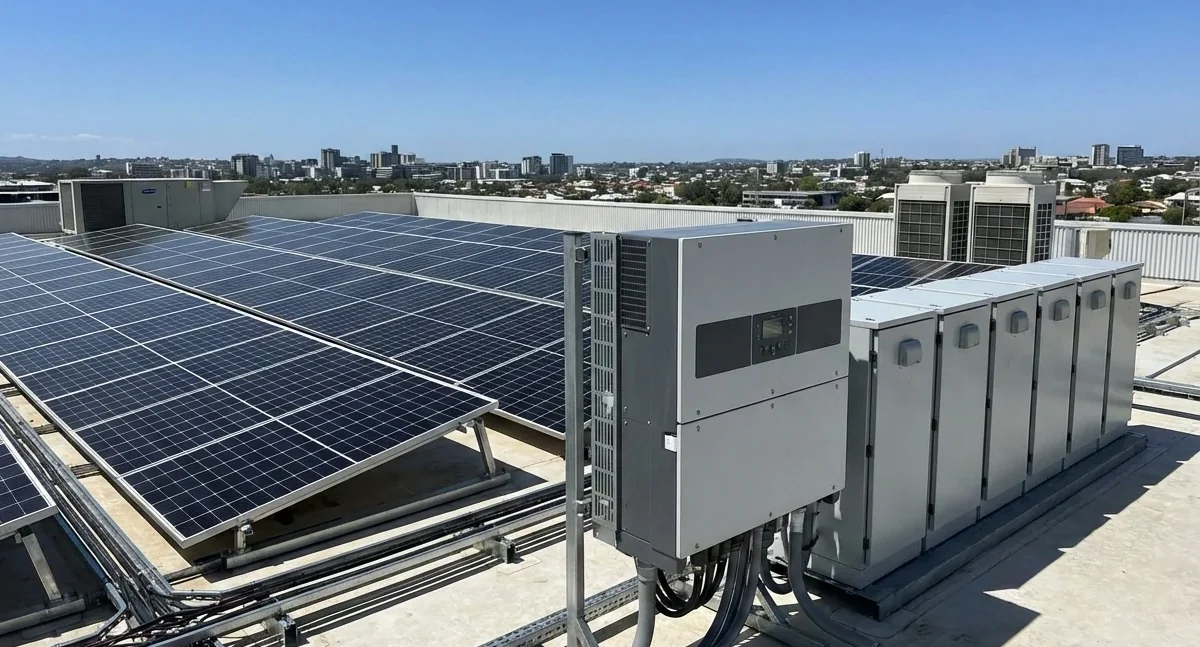
In the rapidly scaling Commercial and Industrial (C&I) solar sector, the physical rooftop array is only the beginning of the energy asset. For Engineering, Procurement, and Construction (EPC) firms, the true engineering challenge lies in safely and efficiently converting massive volumes of direct current (DC) into grid-synchronized alternating current (AC). In high-capacity commercial environments—ranging from sprawling logistics warehouses to heavy manufacturing plants—the definitive power conversion platform is the Three-Phase Solar Inverter.
Unlike residential solar setups that utilize split-phase or single-phase connections, commercial facilities operate on complex, heavy-duty three-phase electrical networks (typically 400V or 480V). Specifying the correct inverter topology is critical to preventing phase imbalance, maximizing energy yield, and ensuring seamless compliance with stringent utility grid codes. This B2B technical guide explores the architectural advantages of three-phase systems and the critical importance of specifying an advanced MPPT On-Grid Solar Inverter for modern commercial PV deployments.
1. The Architecture of Three-Phase Power Delivery
Commercial facilities consume massive amounts of electricity to drive heavy loads: industrial chillers, large-scale air compressors, manufacturing conveyor systems, and high-capacity HVAC units. These robust motors require a continuous, smooth delivery of power, which a single-phase system inherently cannot provide.
Phase Balancing and Conductor Efficiency
A Three-Phase Solar Inverter generates three distinct alternating currents, each separated by 120 electrical degrees. This continuous, overlapping wave of power eliminates the electrical “pulsing” inherent in single-phase systems, delivering highly stable torque to industrial machinery. Furthermore, because three-phase power transmits substantially more power using fewer massive conductors, it drastically reduces the required cross-sectional area (gauge) of the AC copper cables. For EPCs, this translates to massive savings on Capital Expenditure (CAPEX) for copper wire, conduit routing, and heavy electrical switchgear over long commercial wire runs.
Symmetrical Grid Synchronization
Utility companies strictly mandate that heavy commercial solar arrays feed power back into the local distribution grid symmetrically. If an EPC attempted to use multiple single-phase inverters to offset a large commercial load, it would risk creating a severe phase imbalance on the utility transformer. A native three-phase inverter inherently balances the AC output across all three electrical legs (L1, L2, L3) equally, ensuring immediate compliance with commercial grid-interconnection standards and avoiding costly utility penalties.
2. Mastering Roof Complexity: The Role of MPPT
A common engineering fallacy is assuming that commercial flat rooftops are perfect, unshaded expanses. In reality, C&I rooftops are highly congested terrains filled with mechanical penthouses, exhaust fans, HVAC cooling towers, and parapet walls. These structures cast dynamic, shifting shadows across the PV array throughout the solar day.
The Microprocessor Algorithm
To combat this, specifying a premium MPPT On-Grid Solar Inverter is an absolute necessity. MPPT (Maximum Power Point Tracking) is an advanced microprocessor algorithm that continuously scans the DC voltage and current generated by a specific “string” of solar panels. As solar irradiance changes due to passing clouds, temperature fluctuations, or structural shading, the MPPT algorithm dynamically adjusts the internal electrical resistance to hunt for the optimal “knee” of the P-V curve, extracting the absolute maximum wattage available at that exact millisecond.
Multi-MPPT Architecture: Isolating Shading Losses
If a massive commercial array is fed into an older central inverter with only one or two MPPT channels, a shadow falling on a single string of panels will drag down the voltage of the entire array, resulting in catastrophic energy clipping. Modern string-level Three-Phase Solar Inverters solve this by deploying multi-MPPT architectures—frequently featuring 6 to 12 independent MPPT channels per unit.
This allows EPC engineers to electrically isolate different sections of the roof. The East-facing panels on a saw-tooth roof can be wired to MPPT 1, while the South-facing panels are wired to MPPT 2. If an HVAC cooling tower shades the South string at 3:00 PM, the MPPT algorithm isolates the voltage drop to that specific channel, allowing the rest of the commercial array to continue operating at peak thermodynamic efficiency. For complex C&I rooftops, a multi-channel MPPT On-Grid Solar Inverter is the definitive strategy for maximizing the total daily kilowatt-hour (kWh) yield.
3. Advanced Grid Support and Smart Inverter Capabilities
A commercial solar array is not a passive energy generator; it is a massive, decentralized power plant directly coupled to the utility grid. As global solar penetration increases, utility operators require these commercial assets to actively stabilize the local distribution network.
Reactive Power (VAR) Compensation
Heavy commercial machinery (like induction motors and transformers) creates “reactive power”—energy that bounces back and forth on the grid without doing real work, dragging down the overall power factor and destabilizing voltage. Modern Three-Phase Solar Inverters function as “smart inverters.” They can dynamically inject or absorb reactive power (VARs) on demand, actively correcting the facility’s power factor. In many jurisdictions, deploying a smart MPPT On-Grid Solar Inverter capable of VAR compensation allows the commercial facility to avoid steep utility penalties for poor power factor.
Low Voltage Ride Through (LVRT)
Historically, if the utility grid experienced a sudden voltage dip (brownout), grid-tied inverters were programmed to instantly disconnect (trip) to protect themselves. However, if thousands of commercial inverters trip simultaneously during a minor grid fluctuation, it can trigger a cascading, catastrophic regional blackout. Modern commercial inverters feature Low Voltage Ride Through (LVRT) capabilities. During a grid disturbance, the inverter intelligently stays online, injecting reactive current to support grid voltage until the utility network stabilizes, thereby acting as a critical stabilizing asset for the regional electrical grid.
Comparative Matrix: Commercial Inverter Architectures
To assist EPC design teams in rapid value engineering, the following matrix contrasts the physical and operational properties of the two dominant commercial inverter architectures.
| Engineering Metric | String Three-Phase Solar Inverter (Multi-MPPT) | Legacy Central Inverter (Single MPPT) |
|---|---|---|
| MPPT Granularity | Excellent. 6 to 12 independent channels isolate shading losses. | Poor. 1 or 2 channels. Entire array is dragged down by minor shading. |
| O&M and Redundancy | High. If one 100kW string inverter fails, the rest of the array stays online. | Low. A single point of failure (e.g., a 1MW central unit) halts all production. |
| Installation (CAPEX) | No heavy machinery required. Wall or roof-mounted by 2 technicians. | Requires cranes, heavy concrete pads, and specialized rigging. |
| Optimal Application | Complex C&I rooftops, distributed ground mounts, varied orientations. | Massive, perfectly flat, unshaded utility-scale desert solar farms. |
4. Thermal Resilience and Digital Fleet Management
In high-capacity commercial environments, the continuous conversion of massive DC loads into AC power generates significant thermal waste. If a Three-Phase Solar Inverter cannot effectively dissipate this heat, the internal microprocessor will trigger thermal derating—intentionally throttling power output to protect the solid-state silicon components (IGBTs). This derating frequently occurs on hot summer afternoons, exactly when the commercial facility is experiencing peak demand charges from heavy air conditioning loads.
Passive Cooling vs. Forced Air
To combat thermal degradation, EPCs must carefully evaluate the inverter’s cooling architecture. Lower-tier commercial units rely on internal mechanical fans (forced air), which introduce a high-failure mechanical wear point and ingest abrasive dust or corrosive industrial particulates. Premium tier-one commercial inverters utilize massive, extruded aluminum heat sinks for passive convection cooling. By eliminating moving parts and sealing the internal electronics (typically to IP65 or NEMA 4X standards), passive cooling drastically reduces long-term Operations and Maintenance (O&M) liabilities and ensures peak thermodynamic conversion even in ambient temperatures exceeding 50°C (122°F).
String-Level Telemetry and Digital O&M
For fleet managers overseeing distributed commercial assets, an MPPT On-Grid Solar Inverter is the primary digital node for fleet diagnostics. Premium units transmit highly granular, string-level voltage and current data to cloud-based O&M portals via 4G/LTE or Ethernet. If a specific string of panels experiences a blown fuse, severe soiling, or a ground fault, the inverter instantly flags the exact location of the failure. This digital telemetry allows O&M teams to execute predictive maintenance and dispatch technicians with precise diagnostic data, severely reducing expensive “truck rolls” and minimizing Non-Productive Time (NPT).
Conclusion: Securing Commercial Energy ROI
Procuring the power conversion hardware for a Commercial and Industrial (C&I) solar array is a high-stakes engineering calculation. Treating the inverter as a commoditized afterthought inevitably leads to severe operational liabilities: catastrophic voltage clipping due to poor shading management, phase imbalance on the utility transformer, and premature thermal derating during peak demand hours.
By specifying a robust, multi-channel MPPT On-Grid Solar Inverter, EPC contractors can actively overcome the complex shading challenges inherent to commercial rooftops, extracting maximum yield from every square meter of the array. Furthermore, deploying a native Three-Phase Solar Inverter guarantees symmetrical power delivery, superior conductor efficiency across long commercial wire runs, and full compliance with advanced utility grid codes. Ultimately, the three-phase string inverter is the definitive technological cornerstone for securing long-term financial ROI and energy resilience in the modern commercial facility.
Frequently Asked Questions (FAQ)
What is the primary difference between a single-phase and a three-phase solar inverter?
A single-phase inverter outputs AC power along a single electrical wave, which is standard for most residential homes. A Three-Phase Solar Inverter outputs three overlapping AC waves (separated by 120 electrical degrees). This provides a smoother, more continuous flow of power required to operate heavy industrial machinery, large HVAC systems, and commercial induction motors. Three-phase systems also allow for smaller gauge wiring over long distances, saving massive amounts of CAPEX on copper.
Why is a multi-MPPT architecture critical for commercial flat rooftops?
Commercial rooftops are rarely perfectly flat and unshaded; they contain HVAC cooling towers, parapet walls, and mechanical penthouses that cast shifting shadows throughout the day. If a massive solar array uses an inverter with only one MPPT, a shadow on just a few panels will drag down the voltage of the entire system. A multi-channel MPPT On-Grid Solar Inverter electronically isolates the roof into different zones. If one zone gets shaded by a cooling tower, the MPPT isolates that loss, allowing the rest of the unshaded array to continue generating power at absolute peak efficiency.
Will an MPPT on-grid solar inverter provide power to my facility during a utility blackout?
No. By definition and by strict electrical code, a standard MPPT On-Grid Solar Inverter must feature “anti-islanding” protection. If the utility grid fails, the inverter must instantly shut down its AC output in less than two seconds. This prevents the commercial solar array from back-feeding live electricity into the local power lines, which could electrocute utility line workers attempting to repair the grid. To have backup power during a blackout, the facility must specify a “Hybrid” three-phase inverter paired with a heavy-duty commercial battery energy storage system (BESS).