
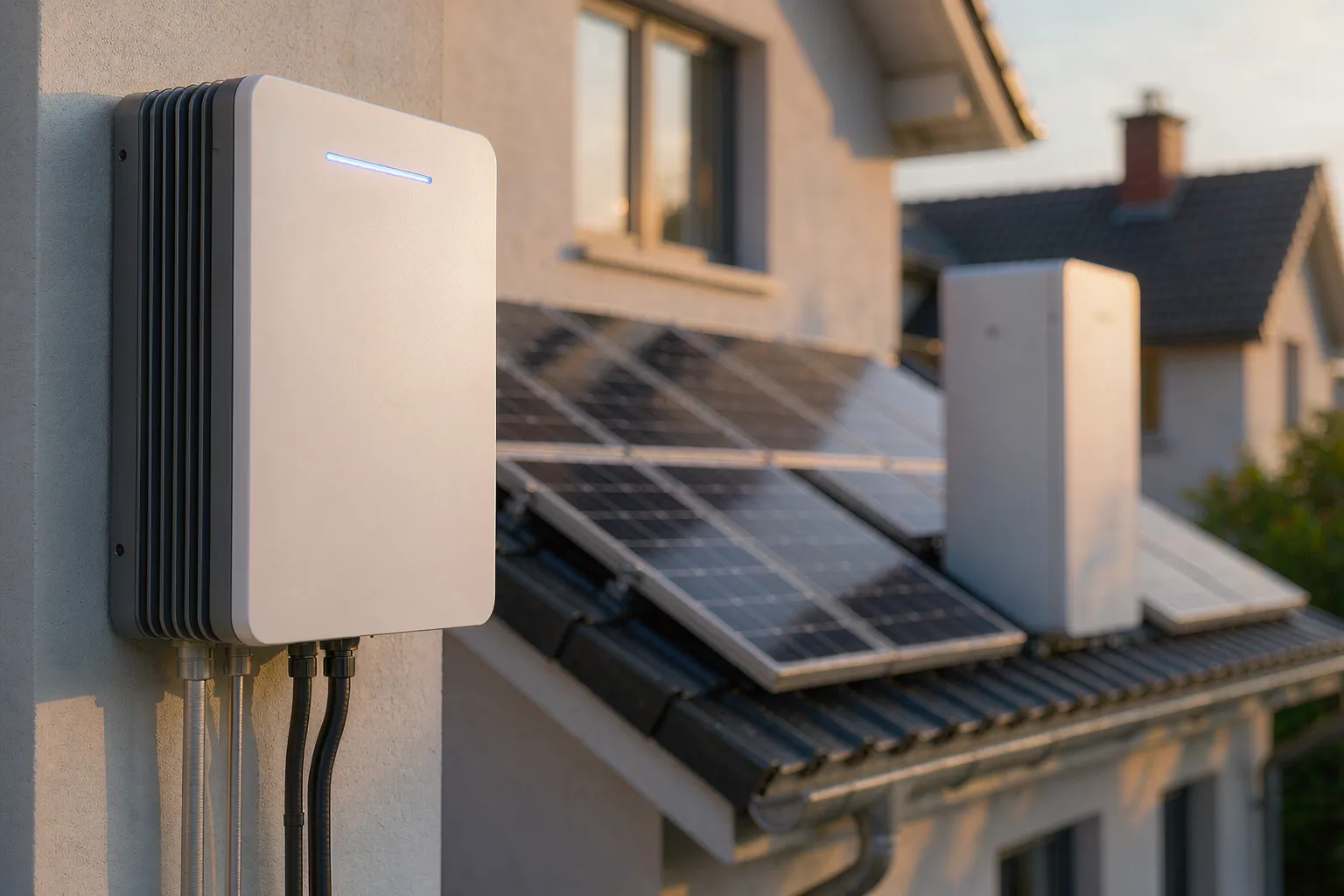
In the rapidly scaling residential solar market, Engineering, Procurement, and Construction (EPC) firms frequently deploy photovoltaic (PV) arrays across thousands of disparate rooftops. While solar modules capture the raw irradiance, the absolute core of the residential energy asset is the power conversion hardware. For standard homes connected to standard utility grids (typically 230V in Europe/APAC or split-phase 120/240V in North America), the Single-Phase Solar Inverter acts as the central intelligence of the entire system.
However, for fleet operators and B2B procurement directors, selecting the correct Solar Inverter involves far more than simply matching the wattage of the roof array. Specifying an under-engineered inverter leads to aggressive thermal derating, severe voltage clipping, and a significantly inflated Levelized Cost of Energy (LCOE). Conversely, selecting the optimal architecture guarantees maximum thermodynamic efficiency, seamless grid compliance, and a lower total Operational Expenditure (OPEX) across a 15-year lifecycle. This technical guide outlines the critical engineering parameters required to specify a high-performance Single-Phase Solar Inverter for residential deployments.
1. System Architecture: String vs. Hybrid Configurations
The first strategic decision an EPC must make is determining the fundamental topology of the residential installation. The architecture of the inverter fundamentally dictates the future flexibility and resilience of the solar asset.
The Traditional Grid-Tied String Inverter
For decades, the standard Single Solar Inverter was a purely grid-tied string inverter. This unit takes high-voltage DC power from strings of roof-mounted panels and converts it directly into single-phase AC power to offset the home’s utility consumption. These units are highly cost-effective (lowest initial CAPEX) and boast extreme thermodynamic conversion efficiencies (frequently exceeding 98%). However, they are strictly unidirectional. If the utility grid fails, a traditional grid-tied inverter must immediately shut down to comply with anti-islanding regulations, leaving the home without power despite having a fully functional solar array.
The Hybrid Single-Phase Architecture
As residential energy markets pivot towards Time-of-Use (TOU) rates and grid instability increases, the Hybrid Single-Phase Solar Inverter has become the dominant specification. A hybrid unit features complex internal DC-coupled bidirectional architecture. It can simultaneously manage the MPPT (Maximum Power Point Tracking) of the solar array, convert power to AC for household loads, and intelligently charge or discharge a high-voltage lithium-ion battery bank. For modern residential EPCs, specifying a hybrid inverter—even if batteries are not installed on day one—”future-proofs” the installation, preventing a costly AC-coupled retrofit later.
2. Maximizing Energy Yield: DC-to-AC Sizing and MPPT
A frequent error in residential solar design is specifying a Single Solar Inverter whose AC output rating exactly matches the DC nameplate rating of the solar panels on the roof (a 1:1 ratio). In applied thermodynamics, this is highly inefficient.
The Science of DC Oversizing (DC/AC Ratio)
Solar panels almost never produce their laboratory-rated maximum wattage in the real world due to thermal degradation (temperature coefficients), imperfect roof azimuths, and atmospheric dust. To ensure the Solar Inverter operates at its peak efficiency curve for the maximum number of hours per day, system engineers intentionally “oversize” the DC array.
A standard engineering practice is applying a DC-to-AC ratio of 1.20 to 1.35. For example, an EPC might connect 6.5kW of DC solar panels to a 5.0kW Single-Phase Solar Inverter. While a tiny fraction of power is “clipped” (lost as heat) during absolute peak solar noon on a freezing, clear day, the inverter will operate at maximum capacity for a much wider window during the morning and late afternoon, drastically increasing the total daily kilowatt-hour (kWh) yield and financial ROI.
Multi-MPPT Architecture: Solving Roof Complexity
Unlike flat commercial rooftops, residential architecture frequently dictates that solar panels be distributed across multiple roof pitches (e.g., East, South, and West faces) or subjected to partial shading from dormers and trees. If these disparate strings are fed into a Single Solar Inverter with only one Maximum Power Point Tracker (MPPT), the algorithm will average the voltage, dragging the unshaded panels down to the performance level of the shaded ones.
Procurement specifications for residential fleets must mandate inverters with dual (or multiple) independent MPPT channels. This allows the inverter’s microprocessor to electrically isolate the East-facing string from the South-facing string, dynamically optimizing the P-V curve of each array independently and preventing localized shading from crippling the entire system’s energy yield.
3. Thermal Management: Combating Heat Degradation
The solid-state conversion of DC to AC power generates substantial waste heat. If a Solar Inverter cannot effectively dissipate this heat, the internal microprocessor will initiate “thermal derating”—intentionally throttling power output to prevent the silicon components (IGBTs or MOSFETs) from melting. A 5kW inverter might derate to 3.5kW on a hot summer afternoon, exactly when maximum solar generation is required to offset heavy air conditioning loads.
Active vs. Passive Cooling
Lower-tier residential inverters rely on active cooling via internal mechanical fans. While cheaper to manufacture, fans draw in abrasive dust, represent a high-failure mechanical wear point, and introduce unwanted acoustic noise into the residential environment. Premium tier-one Single-Phase Solar Inverter models utilize massive, extruded aluminum heat sinks for passive convection cooling. By eliminating moving parts, passive cooling drastically reduces OPEX, ensures silent operation, and guarantees stable power output even in extreme ambient temperatures exceeding 45°C (113°F).
4. Smart Grid Compliance and Anti-Islanding
A residential Solar Inverter does not operate in isolation; it is legally bound to the utility grid. Modern EPCs must specify “smart inverters” capable of executing advanced grid-support functions to comply with evolving international utility codes.
Beyond mandatory rapid-shutdown and anti-islanding protocols (which instantly disconnect the inverter during a grid blackout to protect utility line workers), modern Single-Phase Solar Inverter units must comply with advanced grid codes like IEEE 1547 or California’s Rule 21. These smart inverters can dynamically inject or absorb reactive power (VARs) to stabilize local grid voltage, allowing utilities to manage the massive influx of distributed solar generation without destabilizing neighborhood transformers.
Comparative Matrix: Residential Inverter Topologies
To assist EPC design teams in rapid value engineering, the following matrix contrasts the physical and operational properties of the dominant residential inverter architectures.
| Engineering Metric | Standard Grid-Tied Single-Phase Solar Inverter | Hybrid Single-Phase Solar Inverter |
|---|---|---|
| Primary Function | Converts DC to AC strictly for immediate household use or grid export. | Manages PV array, charges/discharges batteries, and supplies AC loads. |
| Grid Outage Performance | Shuts down completely. No backup power available during blackouts. | Isolates from grid and supplies backup power via battery storage. |
| Initial CAPEX | Low. Highly cost-effective for simple net-metering markets. | Moderate to High. Requires advanced bidirectional power electronics. |
| Future Proofing | Poor. Adding batteries later requires an expensive AC-coupled retrofit. | Excellent. “Storage-ready” for seamless DC-coupled battery integration. |
5. Digital O&M and Fleet Management
For a residential homeowner, the inverter is simply a box on the wall. For an EPC firm or a B2B solar leasing company managing a portfolio of thousands of residential systems, every Single Solar Inverter is a critical digital node in a massive decentralized power plant. The communication architecture of the inverter directly dictates the Operations and Maintenance (O&M) OPEX.
Modern procurement specifications must require native Wi-Fi, 4G/LTE, or Ethernet connectivity. A high-performance Solar Inverter continuously pushes granular string-level voltage, current, and temperature data to a cloud-based fleet management portal. This allows EPC engineers to execute remote firmware updates, digitally diagnose string failures, and perform predictive maintenance before a complete system failure occurs. By drastically reducing “truck rolls” (the expensive dispatch of field technicians for simple diagnostic checks), robust digital monitoring significantly lowers the Total Cost of Ownership (TCO) for fleet operators.
Conclusion: The Core of the Residential Asset
Specifying a Single-Phase Solar Inverter for residential deployments is a complex engineering decision that directly impacts the lifetime financial viability of the solar asset. Treating the inverter as a commoditized afterthought inevitably leads to severe operational liabilities, including premature thermal derating, catastrophic clipping losses due to poor MPPT management, and an inability to interface with future battery storage technologies.
By engineering the residential system with an optimal DC-to-AC ratio, mandating multi-MPPT architectures to mitigate complex roof shading, and prioritizing passive thermal management, EPC firms can maximize total daily energy yield. Furthermore, transitioning from standard grid-tied units to hybrid architectures ensures that the Single Solar Inverter is “storage-ready,” effectively future-proofing the installation against volatile utility rates and guaranteeing long-term energy resilience for the homeowner.
Frequently Asked Questions (FAQ)
What happens if I install a single-phase solar inverter on a three-phase property?
In many global regions, large residential properties or light commercial buildings feature a three-phase utility connection. While you can technically install a Single-Phase Solar Inverter on one phase of a three-phase system, it will only offset the electrical loads connected specifically to that individual phase. This creates phase imbalance and severe electrical inefficiency. For three-phase properties, EPCs must specify a dedicated three-phase inverter to evenly distribute the solar generation across all three electrical legs.
Why is my inverter power output “flat-lining” or clipping precisely at noon?
This is a normal and calculated engineering phenomenon resulting from a high DC-to-AC ratio. If your EPC installed 6.5kW of solar panels connected to a 5.0kW Solar Inverter, the inverter will physically cap (clip) its output at exactly 5.0kW during peak solar noon. While it appears you are “losing” power at the peak, this oversizing allows the inverter to wake up earlier in the morning and stay on later into the evening, operating at maximum efficiency for a wider window and ultimately generating more total daily kilowatt-hours (kWh) than a perfectly 1:1 matched system.
Does a single solar inverter require a lot of mechanical maintenance?
If you specify a premium inverter utilizing passive thermal management (massive external aluminum heat sinks), it requires virtually zero mechanical maintenance because it possesses no moving parts. However, if you procure a lower-tier inverter that relies on active mechanical cooling fans, those fans will eventually ingest dust, degrade, and fail. A failed cooling fan leads to instant thermal derating and potential complete microprocessor failure. Therefore, passive cooling is highly recommended to minimize long-term O&M liabilities.