
In the rapidly accelerating landscape of utility-scale energy storage and heavy-duty commercial electrification, the physical and chemical parameters of energy storage components dictate overall project viability. For Engineering, Procurement, and Construction (EPC) firms, utility operators, and B2B industrial integrators, selecting the optimal energy storage medium is a foundational capital decision. Over the past decade, lithium iron phosphate technology has dominated the industrial sector due to its unparalleled safety profile and thermal stability. Today, the industry is witnessing a massive transition toward a new dimensional standard: high-capacity 314Ah LFP Battery Cells.
Understanding the transition from the legacy 280Ah standard to the advanced 314Ah architecture requires a deep dive into electrochemical engineering. This comprehensive B2B technical guide dissects the core specifications of 314Ah LFP Battery Cells, analyzing their true capacity, cycle life longevity, energy density advancements, and the grid-scale applications that make them the definitive choice for modern Battery Energy Storage Systems (BESS).
The Evolutionary Leap to 314Ah Architecture
To appreciate the significance of the 314Ah capacity, one must first understand the historical context of prismatic cell manufacturing. For several years, the 280Ah prismatic cell (specifically the standardized 71173 form factor measuring roughly 71mm in thickness, 173mm in width, and 207mm in height) served as the workhorse of the global BESS market. However, as grid-scale projects expanded from megawatt-hour (MWh) to gigawatt-hour (GWh) scales, developers demanded higher energy density without altering the physical footprint of the battery racks and containerized enclosures.
Overcoming the 280Ah Industrial Bottleneck
The development of 314Ah LFP Battery Cells represents a triumph in materials science rather than a simple increase in physical size. Battery engineers achieved this capacity upgrade by optimizing the internal active materials. By utilizing thinner, high-porosity separators, highly compacted graphite anodes, and enhanced lithium iron phosphate cathode powders, manufacturers successfully increased the amount of active energy-storing material within the exact same 71173 aluminum casing used for 280Ah cells.
This physical consistency is crucial for the B2B supply chain. It means that integrators can utilize the same automated laser-welding lines, busbars, thermal management cold plates, and structural battery modules, but yield a system with approximately 12% more total energy capacity. This seamless integration drastically reduces the Levelized Cost of Storage (LCOS) for large-scale infrastructure projects.
Core Technical Specifications of the 314Ah Form Factor
Evaluating 314Ah LFP Battery Cells requires moving beyond marketing brochures and strictly analyzing the electrochemical and thermodynamic specifications that govern their performance in harsh industrial environments.
True Capacity and Usable Energy
The nominal capacity of these advanced cells is rated at 314 Ampere-hours (Ah) at a standard 0.5C charge/discharge rate, operating at a nominal voltage of 3.2V. When calculated out (314Ah × 3.2V), a single cell yields just over 1,004 Watt-hours (Wh), or 1.004 kWh of gross energy.
However, commercial BESS controllers rarely allow a battery to operate at a 100% Depth of Discharge (DoD) to protect the internal electrochemistry. In practical applications, Battery Management Systems (BMS) restrict the usable capacity to a tighter State of Charge (SoC) window, typically 10% to 90%. Even with this protective buffer, the sheer gross capacity of 314Ah LFP Battery Cells allows a standard 20-foot shipping container—which historically held 3.44 MWh of 280Ah cells—to now house over 5.0 MWh of energy, completely revolutionizing the footprint-to-power ratio for solar parks and wind farms.
Volumetric and Gravimetric Energy Density
Energy density is measured in two ways: gravimetric (Watt-hours per kilogram, Wh/kg) and volumetric (Watt-hours per liter, Wh/L). While standard lithium-ion chemistries like Nickel Manganese Cobalt (NMC) boast higher absolute energy densities, they suffer from severe thermal runaway risks, making them a liability for tightly packed grid storage.
Modern 314Ah LFP Battery Cells achieve a gravimetric energy density of approximately 180 to 190 Wh/kg and a volumetric energy density exceeding 390 Wh/L. This is accomplished without utilizing volatile oxygen-releasing transition metals in the cathode. As mandated by global safety organizations, including the stringent testing protocols of the U.S. Department of Energy (DOE) Office of Electricity and UL 9540A thermal propagation standards, the inherently stable P-O (phosphorus-oxygen) covalent bond in the LFP cathode structure ensures that these high-density cells remain highly resistant to thermal runaway, even under severe mechanical penetration or electrical short-circuit conditions.
Cycle Life and Degradation Economics: The 10,000-Cycle Benchmark
In grid-scale energy storage and commercial peak-shaving applications, the initial capital expenditure (CAPEX) of the battery system is secondary to the Levelized Cost of Storage (LCOS) over the project’s lifespan. To achieve a competitive LCOS, the energy storage medium must survive daily deep-discharge cycles for decades without requiring premature augmentation or replacement. This is where the electrochemical longevity of 314Ah LFP Battery Cells provides a massive financial advantage over legacy chemistries.
Understanding Cyclic vs. Calendar Aging
Battery degradation occurs through two primary vectors: cyclic aging (wear and tear from charging and discharging) and calendar aging (chemical degradation over time, even when idle). In standard lithium-ion cells, the primary cause of capacity fade is the continuous thickening of the Solid Electrolyte Interphase (SEI) layer on the anode. As the SEI layer thickens over thousands of cycles, it permanently consumes active lithium ions, removing them from the energy transfer process and increasing the cell’s internal impedance.
To combat this in the new 314Ah architecture, tier-one manufacturers deploy advanced electrolyte additives and proprietary pre-lithiation techniques. These engineering interventions stabilize the SEI layer during the initial factory formation cycles, preventing it from continuously growing during field operation. Furthermore, the robust olivine crystal structure of the lithium iron phosphate cathode prevents the micro-cracking and active material dissolution that plagues NMC (Nickel Manganese Cobalt) cells during high-current cycling.
The Commercial Lifespan
As a result of these electrochemical advancements, commercial-grade 314Ah LFP Battery Cells routinely achieve a cycle life of 8,000 to 12,000 cycles at a 0.5P/0.5P charge-discharge rate before reaching 70% State of Health (SoH). In practical terms, for a solar-plus-storage facility executing one full cycle per day, this translates to an operational lifespan exceeding 20 to 25 years. This unprecedented longevity aligns perfectly with the standard Power Purchase Agreement (PPA) lifespans of modern solar and wind infrastructure, effectively eliminating the need for mid-project battery replacement.
Thermal Management Imperatives for High-Capacity Architectures
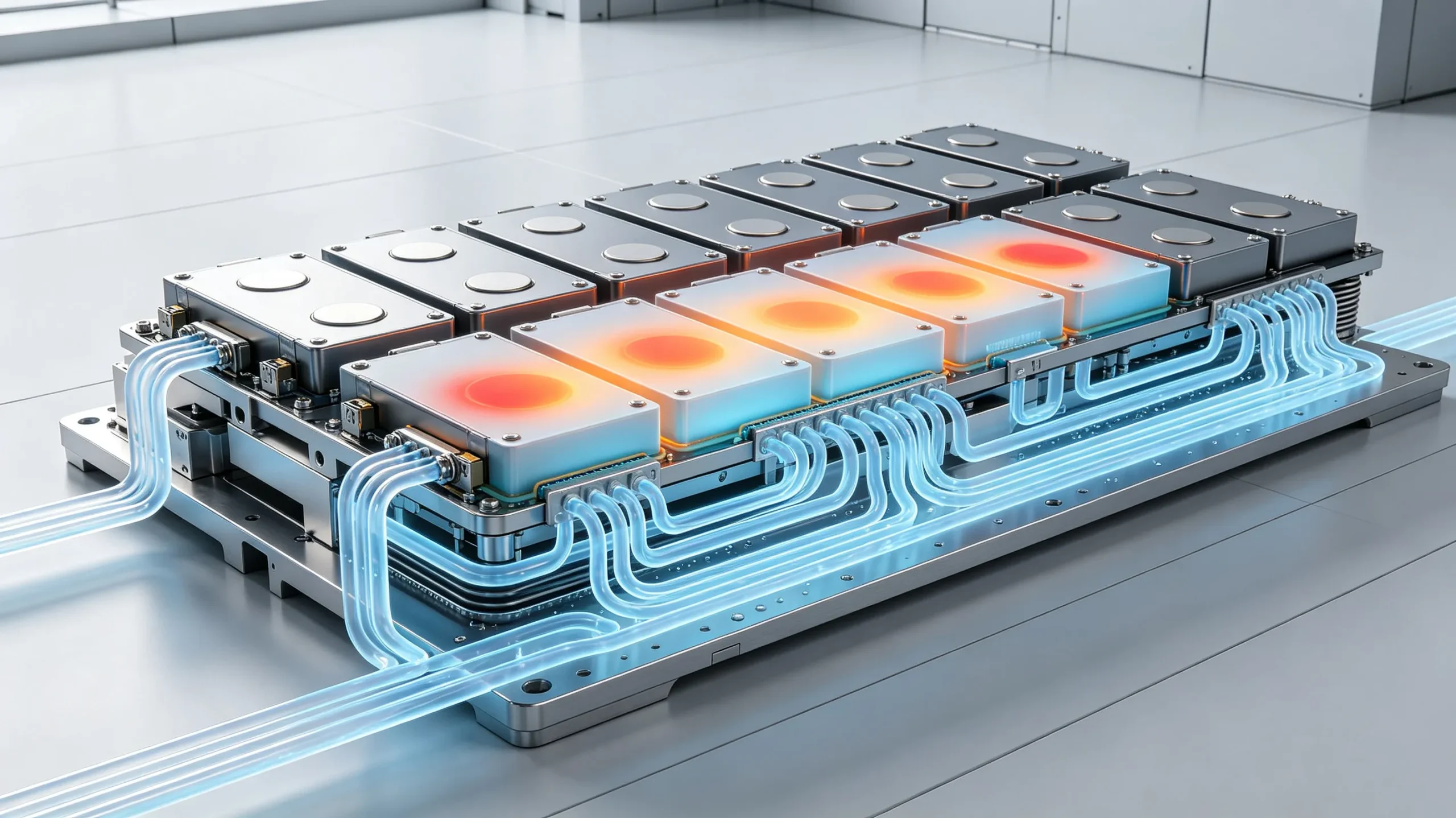
While the capacity increase to 314Ah is a massive boon for project economics, it introduces distinct thermodynamic challenges. Because manufacturers packed more active material into the exact same 71173 aluminum casing, the electrodes within the cell are physically thicker. Thicker electrodes mean that heat generated deep within the core of the cell has a longer, more difficult path to travel to the outer aluminum casing where it can be dissipated.
If this internal heat is not aggressively managed, the core of the cell will operate at a significantly higher temperature than the exterior. This temperature delta (ΔT) causes uneven degradation; the hotter center ages faster than the cooler edges, leading to severe cell imbalance and a drastic reduction in the module’s overall usable capacity.
The Shift to Liquid Cooling Integration
For B2B integrators deploying 314Ah systems, traditional forced-air HVAC cooling is no longer a viable engineering specification. The thermal density of these cells strictly dictates the use of advanced Liquid-Cooled Thermal Management Systems (TMS).
In a properly engineered 314Ah liquid-cooled rack, highly conductive aluminum cold plates are placed in direct physical contact with the battery modules. A glycol-water heat transfer fluid is pumped through micro-channels within these plates, absorbing the heat directly from the cell casings. A premium liquid cooling system maintains the overall battery pack temperature within the optimal 20°C to 25°C window, while guaranteeing that the temperature difference (ΔT) between any two cells in the entire multi-megawatt container remains below 3°C. This strict thermal uniformity is the absolute prerequisite for achieving the promised 10,000-cycle lifespan.
Comparative Matrix: 280Ah vs. 314Ah vs. NMC
To provide actionable intelligence for procurement directors and EPC developers, a direct technical comparison is required. The following matrix illustrates why 314Ah LFP Battery Cells have rapidly become the default specification for new utility-scale projects, rendering the 280Ah standard obsolete while maintaining safety superiority over high-density NMC cells.
| Engineering Metric | Standard 280Ah LFP | Advanced 314Ah LFP | High-Density NMC (Lithium Nickel Manganese Cobalt) |
|---|---|---|---|
| Gross Energy per Cell | ~896 Wh | ~1,004 Wh (12% Increase) | Highly variable, but structurally volatile at large scales |
| Standard Cycle Life (0.5C, 25°C) | 6,000 – 8,000 Cycles | 8,000 – 12,000+ Cycles | 2,000 – 3,500 Cycles |
| Thermal Runaway Initiation Temp. | ~270°C (Highly Stable) | ~270°C (Highly Stable) | ~150°C to 210°C (Highly Volatile) |
| Form Factor / Casing | 71173 Prismatic | 71173 Prismatic (Drop-in replacement) | Pouch or Prismatic (Requires heavy structural support) |
| 20-Foot Container Capacity (Estimated) | 3.44 MWh to 3.72 MWh | 5.01 MWh+ | Not recommended for containerized grid storage due to fire risk |
Primary Applications and Infrastructure Deployment
The transition to 314Ah LFP Battery Cells is not merely a component upgrade; it is an architectural enabler for the next generation of massive energy infrastructure. The unique combination of extreme cycle life, absolute thermal stability, and dense 5MWh+ containerization makes these cells the critical building blocks for several heavy industrial sectors.
1. Utility-Scale Solar-Plus-Storage
As grid operators globally enforce strict ramp-rate controls and curtailment limits on massive solar farms, the ability to store vast amounts of energy during peak production (solar noon) and discharge it during peak demand (evening hours) is the only way for developers to secure project profitability. The 314Ah format allows EPCs to deploy massive GWh-scale storage with a significantly smaller physical land footprint. Because they utilize the exact same racks as legacy 280Ah systems, the civil engineering, concrete pad sizing, and cabling infrastructure remain largely unchanged, drastically accelerating construction timelines.
2. C&I Peak Shaving and Demand Charge Mitigation
For Commercial and Industrial (C&I) facilities—such as heavy manufacturing plants, data centers, and EV fleet charging depots—utility demand charges can account for over 50% of monthly electricity OPEX. By deploying a containerized 314Ah BESS, these facilities can engage in aggressive “peak shaving.” The high energy density allows the system to discharge heavily during the facility’s highest load moments, effectively hiding those load spikes from the utility meter. The 10,000+ cycle life ensures that the system can perform this aggressive duty cycle daily for decades without degrading the asset’s financial ROI.
B2B Procurement Strategy: Securing Tier-One Supply
As the global market aggressively shifts toward this new standard, the supply chain is highly constrained. Procurement directors must exercise extreme caution. Purchasing raw LFP Battery Cells or fully integrated racks through fragmented, third-party distribution channels introduces severe risks regarding cell matching and voltage consistency.
In a 5MWh container containing over ten thousand individual 314Ah cells, the entire system is only as strong as its weakest cell. If cells with varying internal resistances or manufacturing batches are mixed during assembly, the overall capacity of the system will plummet, and thermal imbalances will quickly trigger premature degradation. Therefore, industrial developers must mandate a factory-direct procurement model. Sourcing directly from top-tier cell manufacturers ensures that every single cell in a multi-megawatt project is chronologically sorted, ultrasonically welded on the same automated line, and perfectly matched in voltage and internal impedance before shipping. This direct-from-factory integration is the only way to guarantee the 20-year performance warranties required for grid-scale deployment.
Conclusion: The Definitive Storage Standard
The era of the 280Ah battery cell is rapidly concluding, making way for the superior physics and economics of the 314Ah architecture. By maximizing the active material within the proven 71173 prismatic casing, engineers have delivered a component that offers a 12% capacity increase, pushes containerized energy density past 5MWh, and routinely exceeds 10,000 cycles.
However, leveraging this raw potential requires strict adherence to advanced engineering protocols, specifically the mandatory deployment of liquid-cooled thermal management and rigorous factory-direct cell matching. For EPC contractors, utility operators, and heavy industrial facilities, deploying infrastructure based on 314Ah LFP Battery Cells is no longer just a technological upgrade—it is the prerequisite for achieving maximum Levelized Cost of Storage (LCOS) and dominating the future of the decentralized energy grid.
Frequently Asked Questions (FAQ)
What makes 314Ah LFP cells safer than high-density NMC cells?
The safety superiority lies entirely in the cathode’s molecular structure. Lithium Iron Phosphate (LFP) utilizes a highly stable phosphorus-oxygen (P-O) covalent bond. Even under extreme thermal stress, overcharging, or physical penetration, this bond holds strong and does not release oxygen. Conversely, the transition metals in NMC cells break down and release massive amounts of oxygen at high temperatures (around 150°C – 210°C). This released oxygen feeds the internal fire, causing catastrophic, self-sustaining thermal runaway that is virtually impossible to extinguish with standard fire suppression systems.
Can I upgrade my existing 280Ah battery racks with 314Ah cells?
Physically, yes. Because both cells utilize the exact same 71173 aluminum prismatic casing dimensions, a 314Ah cell is a mechanical “drop-in” replacement for older 280Ah systems. However, from a systems engineering perspective, it is highly complex. The Battery Management System (BMS) firmware must be completely rewritten to account for the new charge curves and capacity limits. Furthermore, because the 314Ah cells are thermally denser, the existing cooling infrastructure (especially if it is an older HVAC forced-air system) may be grossly inadequate to handle the increased heat load, leading to rapid degradation.
How does a 314Ah cell achieve 10,000 cycles while older batteries only last 3,000?
The massive leap in cycle life is achieved through chemical stabilization. In older lithium-ion architectures, the Solid Electrolyte Interphase (SEI) layer on the anode constantly grew and cracked during charging and discharging, permanently consuming active lithium and increasing internal resistance. Advanced 314Ah cells utilize highly proprietary electrolyte additives and pre-lithiation techniques that force the SEI layer to form a perfect, stable, and flexible shield during factory assembly. Because this layer no longer thickens over time, the cell retains its active lithium inventory, allowing it to cycle daily for decades with minimal capacity fade.